Chemical analysis for glassmakers : containing methods of analysis for clays and other silicates which will be found useful for the pottery industry (1903)
Uhlig, Edward C. (Edward Carl), b. 1868 · Pittsburgh, Pa. : Kaufman & Gauding · leaf 21
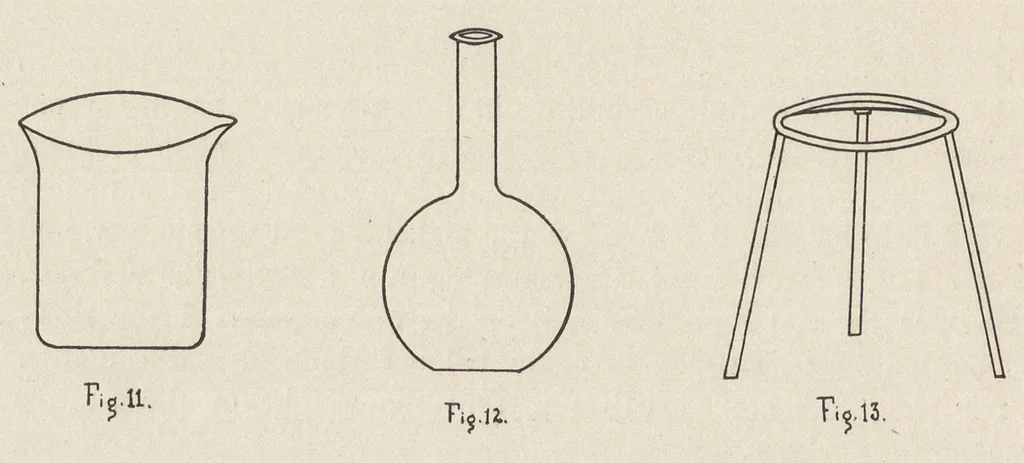
t has no effect on it, it is said to be insoluble. When a liquid has dissolved all of the substance that it can, we have a saturated solution. There are three conditions to be noted, viz: I. The substance may be soluble. II. It may be insoluble. III. It may be partially soluble. I. The Substance is… … ring stand (Fig. 14), and gently heated by a Bunsen burner (Fig. 15). It is well t<^ interpose a piece of wire gauze between the bottom of the vessel and the flame of the burner. The heat- ing is continued until the sample is dissolved. If effervescence or giving-off of gas is noticed, the beaker…
Chemistry, Analytic · Glass manufacture · Glass
Internet Archive · Getty Research Institute · Public domain (published before 1931). Free to use for anything.