The textile fibres; their physical, microscopical, and chemical properties (1908)
Matthews, J. Merritt (Joseph Merritt), 1874-1931 · New York, J. Wiley & sons · leaf 292
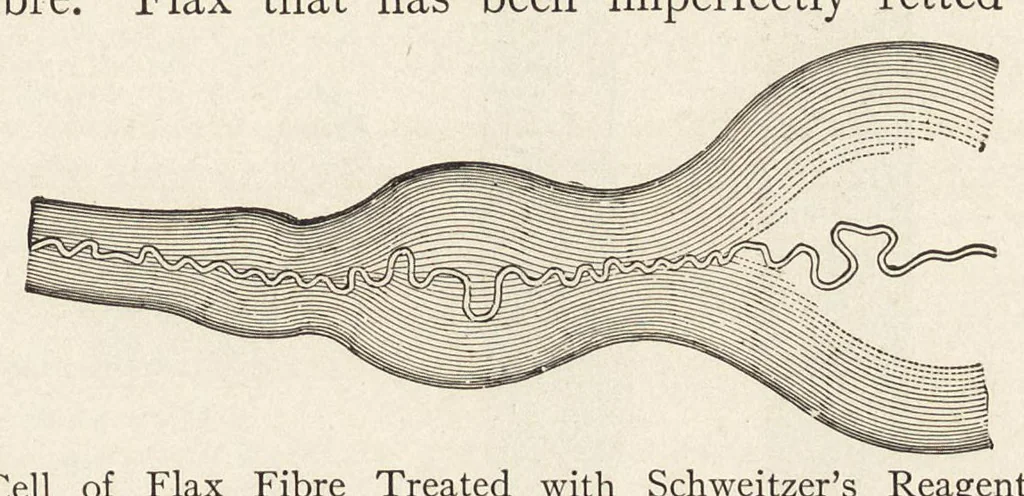
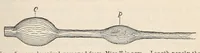
79 LINEN. Schweitzer’s reagent (see Fig. 71), but, unlike cotton, it does not completely dissolve therein.* The color of the best varieties of flax is a pale yellowish white. Flax retted by means of stagnant water, or by dew, is a steel gray, and Egyptian flax is a pearl gray. The pale yellow color… … Fig. 71. — Cell of Flax Fibre Treated with Schweitzer’s Reagent. (X400.) Showing insoluble cuticle of inner canal. (After Wiesner.) greenish color. The natural color of linen is readily bleached by solutions of chloride of lime in a manner similar to the bleach¬ ing of cotton. But the linen fibre…
Textile fibers
Internet Archive · Getty Research Institute · Public domain (published before 1931). Free to use for anything.