Papers read at the Royal Institute of British Architects (1853)
Royal Institute of British Architects · London, Royal Institute of British Architects · leaf 107
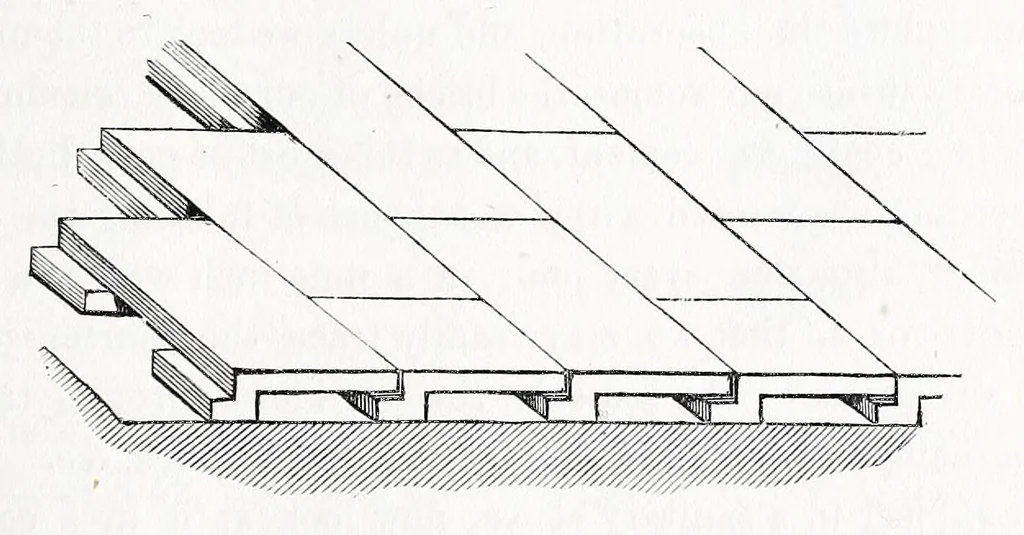
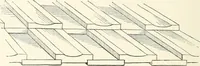
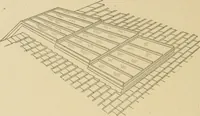
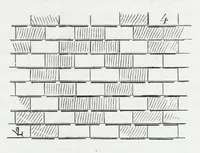
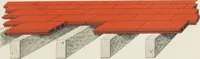
rget its manifold disadvantages. In addition to those just mentioned, we find that if any part of the soil beneath is soft, or varying in solidity, the tile or tiles over it sink slightly and lose their level. This, of course, causes some to be more prominently exposed to wear, and the paving soon… … It is formed of tiles, 1.2 inches by 6, of suitable thickness, each having an under-projecting rib, or flange, which, when laid, forms the bearer of the tile, of which it forms a part, and also a bearer of one edge of the next, leaving a space under the tile for the free circulation of air, which…
Architecture
Internet Archive · Getty Research Institute · Public domain (published before 1931). Free to use for anything.