The practical metal-worker's assistant : comprising metallurgic chemistry, the arts of working all metals and alloys, forging of iron and steel, hardening and tempering, melting and mixing, casting and founding, works in sheet metal, the processes dependent on the ductility of the metals, soldering, and the most improved processes, and tools employed by metal-workers, with the application of the art of electro-metallurgy to manufacturing processes, collected from original sources, and from the works of Holtzapffel, Bergeron, Leupold, Plumier, Napier, Scoffern, Clay, Fairbairn, and others (1872)
Byrne, Oliver · Philadelphia : H.C. Baird · leaf 113
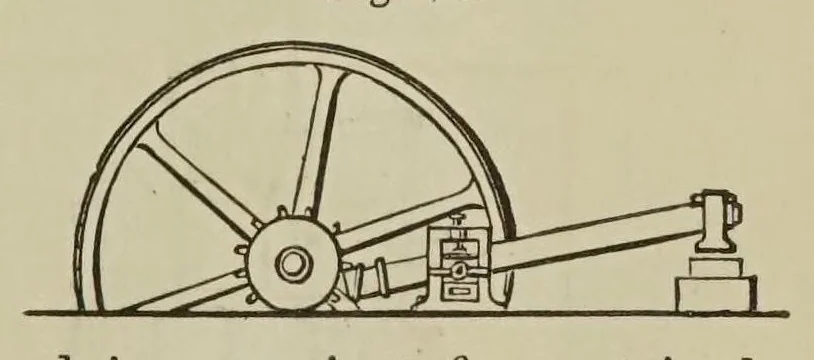
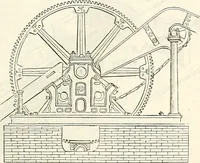
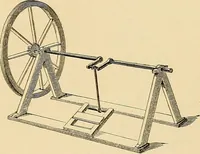
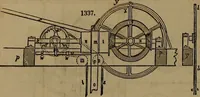
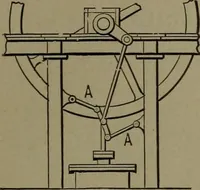
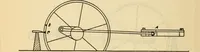
oduce defects so palpable, that we gladly return to the original Nasmyth. The most ancient form of forge-hammer was probably that technically called the “ tennant-helve,” Fig. 70, known in France as the “ Marteau frontal,” from its being lifted at the front end. This hammer is a heavy mass of… … The “ tennant-helves ” being found inconvenient for certain de¬ scriptions of work, the “ tilt-hammer,” Fig. 71, was introduced. In¬ stead of being raised at the front end, this hammer is depressed by a similar “ cam-ring” from a part projecting behind. It is composed of wood and iron, the shank…
Metal-work · Electrometallurgy · Metallurgy
Internet Archive · Getty Research Institute · Public domain (published before 1931). Free to use for anything.