Textile raw materials and their conversion into yarns : (the study of the raw materials and the technology of the spinning process) : a text-book for textile, trade and higher technical schools, as also for self-instruction : based upon the ordinary syllabus and curriculum of the Imperial and Royal Austrian weaving schools (1901)
Zipser, Julius · London : Scott, Greenwood & Son · leaf 77
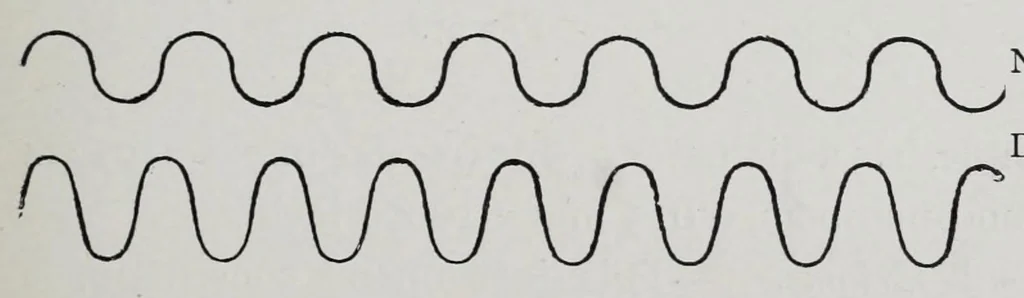
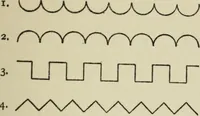
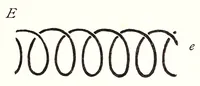
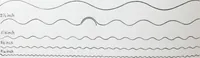
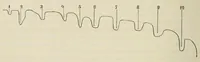
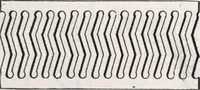
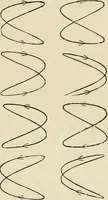
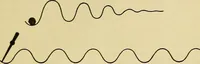
ssume a more or less wavy appearance. It is most particularly developed in merino wool, to a less extent in unimproved stock, and is almost entirely absent in wool from the moorland (Heide) and Zackel breeds. As a rule the number of waves or crinkles increases, with the fineness of the wool, from… … Flat wavy wool. The first of these three kinds is preferred for making the finest cloth goods. In any case the crinkles should be uniform throughout the entire length of the wool hair, thus indicating derivation from a healthy, well-bred animal. When the wool is irregular, with pointed, angular…
Textile fibers · Spinning
Internet Archive · Getty Research Institute · Public domain (published before 1931). Free to use for anything.